%20(38)_edited.jpg)
How Professionals Remove Pet Urine Stains from Carpet


A Pet Urine Carpet Cleaning Project in Madera, CA Near McNally Park
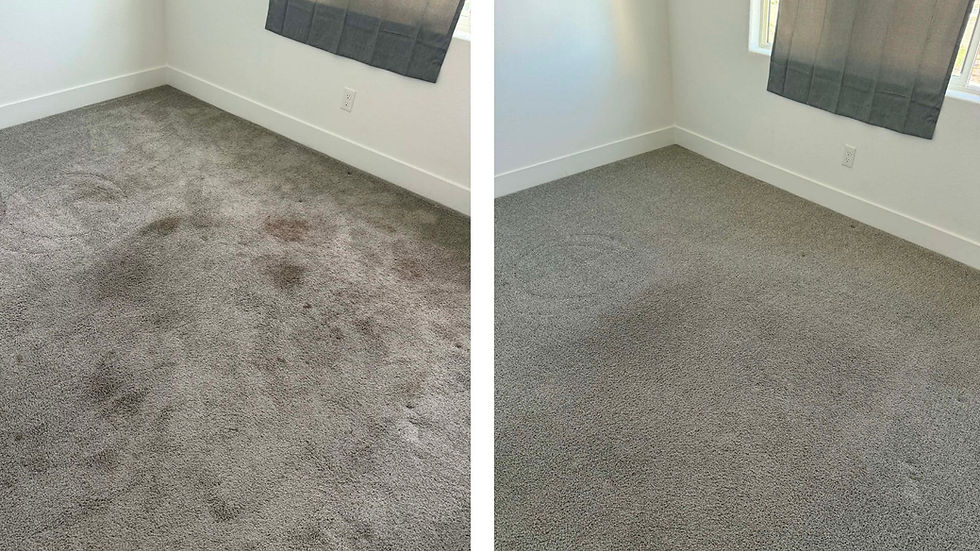
We were called out to a home in Madera, CA near McNally Park where the homeowner had been dealing with a frustrating problem for quite some time. The carpet didn’t look terrible at first glance, but certain areas had dark discoloration and a strong odor that would come and go depending on the weather.
On warmer days or when the home was closed up, the smell became much more noticeable.
This is one of the clearest signs of deep pet urine contamination, not just a surface stain.
Like many homeowners, they had already tried cleaning the area themselves. The carpet looked better temporarily, but the odor and staining kept returning.
This project is a perfect example of how professional pet urine removal actually works, and why it has to be handled differently than standard carpet cleaning.
Why Pet Urine Is More Than Just a Stain
Pet urine is one of the most complex problems in carpet cleaning because it is both chemical and biological.
Urine contains:
Urea
Uric acid
Ammonia
Bacteria
Salts that crystallize as it dries
When the liquid dries, the water evaporates but the uric acid crystals remain embedded in the carpet fibers, backing, and often the pad below.
These crystals are the root of the problem.
They are not removed by basic cleaning, and they reactivate when exposed to moisture.
Why Urine Smell Comes Back After Cleaning
This is where most homeowners get frustrated.
They clean the area, it smells better for a day or two, and then the odor returns.
That happens for two main reasons:
1. Wicking from Below the Surface
If urine has reached the carpet backing or padding, moisture from cleaning can pull that contamination back up to the surface as the carpet dries.
2. Reactivation of Uric Salts
Uric acid crystals are hygroscopic, meaning they attract moisture from the air. In areas like Madera, especially during warmer or more humid conditions, these crystals can reactivate and release odor again.
This is why pet urine issues often seem worse at certain times of day or year.
Why Standard Carpet Cleaning Does Not Work
Traditional carpet cleaning focuses on removing soil and surface contamination.
It is not designed to:
Break down uric acid crystals
Neutralize odor at the source
Flush contamination from the backing and pad
In many cases, using too much water during cleaning can actually make the problem worse by pushing contamination deeper and increasing wicking.
This is why pet urine requires a completely different approach.
The Science Behind Professional Pet Urine Removal
To properly remove pet urine, you have to address three things:
Break down the uric acid crystals
Remove the contamination from all affected layers
Neutralize odor-causing bacteria
If any one of these steps is skipped, the problem can return.
Step 1: Inspection and Detection
For this Madera project, we began with a detailed inspection of the affected areas.
In many cases, urine contamination extends beyond what is visible. We identify all affected zones before beginning treatment so nothing is missed.
Step 2: Enzyme Treatment to Break Down Contamination
We applied a professional enzyme-based urine treatment.
Enzymes are critical because they actually digest the organic material in urine, including the uric acid crystals that cause odor.
This is not a masking process. It is a breakdown process at the molecular level.
Proper dwell time is essential here. The enzymes need time to fully react with the contamination.
Step 3: Subsurface Flushing and Extraction
Once the urine deposits were broken down, we used controlled subsurface extraction to flush the contamination out of the carpet.
This step is what separates professional treatment from basic cleaning.
We are not just cleaning the surface. We are removing contamination from:
Carpet fibers
Carpet backing
The upper portion of the pad when accessible
This is critical for preventing wicking and odor return.
Step 4: Controlled Moisture and Fast Drying
Moisture control is key during this process.
Using too much water can spread contamination. Using too little can leave residue behind.
We balance this carefully and then ensure fast drying so the carpet does not remain damp long enough for problems to return.
In areas like Madera, fast drying is especially important due to temperature fluctuations and indoor humidity conditions.
Why Some Urine Damage Can Become Permanent
It’s important to understand that not all urine damage is reversible.
If urine sits in carpet long enough, it can:
Permanently alter carpet dyes
Damage the backing
Break down fibers
However, most cases we see are contamination-based, not permanent damage, which means they can be corrected with the right process.
The Results for This Madera Home
After completing the treatment, the difference was clear.
The dark staining was significantly reduced, and more importantly, the odor was removed at the source. The carpet no longer released smell as humidity changed throughout the day.
The homeowner was relieved because they had been considering replacing the carpet entirely.
With proper treatment, that was not necessary.
How to Prevent Pet Urine Problems in the Future
The most important factor is speed.
The sooner urine is addressed, the less likely it is to penetrate deep into the carpet system.
Using the correct products also matters. Many store-bought cleaners do not fully break down uric salts and can leave residue behind.
For recurring issues or larger contamination areas, professional treatment is the most reliable solution.
What Is the Best Way to Remove Pet Urine from Carpet?
The best way to remove pet urine from carpet is through enzyme treatment combined with subsurface extraction. This process breaks down uric acid crystals, removes contamination from the carpet and backing, and eliminates odor at the source rather than masking it.


Comments